

Nutrition as the Foundation of Performance
Canine nutrition is far more than a daily routine, for working dogs, it’s the physiological foundation that sustains strength, focus, and resilience.
The way the body converts nutrients into energy and recovery directly affects concentration, response time, and resistance to physical and mental stress.
A well-planned diet does more than enhance performance, it keeps the dog in a constant state of readiness, capable of performing at its best in any context, whether in patrol, detection, protection, or search and rescue.
Understanding Physiological Needs
Before choosing between a natural diet or a high-performance kibble, it’s essential to understand what the canine body truly requires to function efficiently.
Performance depends on a fine balance of energy, proteins, fats, and micronutrients:
- Proteins: built from amino acids, they are essential for muscle synthesis, repair, and growth. Meats, eggs, and organs provide complete profiles.
- Fats: the main energy source for working dogs. They supply essential fatty acids such as omega-3 and omega-6, which are vital for brain function, hormonal balance, and inflammation control.
- Carbohydrates: deliver rapid energy, critical for explosive or high-intensity activities.
- Micronutrients: vitamins and minerals regulate metabolism, muscle contraction, focus, and hydration balance.
Both premium kibble and natural feeding plans can meet these nutritional demands, as long as they’re scientifically balanced and professionally guided.
Natural Feeding: Nutrition in Its Purest Form
Natural feeding consists of fresh, minimally processed foods, meats, organs, bones, eggs, vegetables, and small carbohydrate sources.
When well planned, it provides nutrients in their biological forms, easily recognized and absorbed by the canine body.
Main Benefits
- High digestibility: fresh proteins are easily broken down and absorbed.
- Better micronutrient availability: minerals like iron, zinc, and choline (from liver and eggs) are efficiently utilized.
- Individual control: allows fine-tuning of ingredients and proportions according to workload, environment, and metabolism.
- Lower chemical load: absence of preservatives and artificial colorants reduces long-term stress on liver and kidneys.
Precautions and Risks
Despite its benefits, a natural diet requires technical accuracy and hygiene discipline.
Incorrect calcium-phosphorus ratios, excessive fat, or micronutrient deficiencies can compromise health and performance.
Moreover, raw food handling and storage carry microbial risks.
Studies have shown high contamination rates in commercial raw diets, (including Salmonella and E. coli) which may endanger both dogs and their owners.
A Science.org study found that over 70% of raw pet foods contained “concerning” levels of bacteria, reinforcing the importance of hygiene, storage, and sourcing control.
Gradual Transition: How to Change Safely
Switching from kibble to a natural diet must be done gradually, allowing the digestive system to adapt.
The stomach’s acidity, microbiota, and enzyme profile need time to adjust to fresh foods.
Suggested transition plan (for healthy dogs):
- Days 1–3: 75% kibble + 25% natural food
- Days 4–6: 50% kibble + 50% natural food
- Days 7–10: 25% kibble + 75% natural food
- After 10 days: 100% natural food
During the transition, it’s normal to see softer stools, brief appetite loss, or increased thirst, all part of the adaptation process.
If these symptoms persist, consult a veterinary nutritionist for adjustment.
High-Performance Kibble: Precision and Stability
Super-premium kibble formulas are developed through extensive digestibility and energy-density research.
The extrusion process (high heat and pressure) alters starches and proteins to enhance digestibility and palatability.
After cooking, fats and vitamins are micro-encapsulated, protecting them from oxidation and nutrient loss.
Advantages
- Nutritional consistency: each portion has the same precise composition.
- High caloric density: ideal for dogs under intense workloads.
- Precision formulation: balanced amino acids, antioxidants, and essential fatty acids.
- Practicality and safety: long shelf life, easy storage, and minimal contamination risk.
Limitations
- Limited customization: harder to adjust to individual differences.
- Thermal degradation: some heat-sensitive nutrients lose potency, though offset by fortification.
- Brand dependence: ingredient quality and manufacturing standards vary significantly.
Digestibility and Nutrient Utilization
Digestibility measures how efficiently a dog can break down and absorb nutrients.
A food isn’t truly “rich” unless the body can convert it into usable energy and tissue repair.
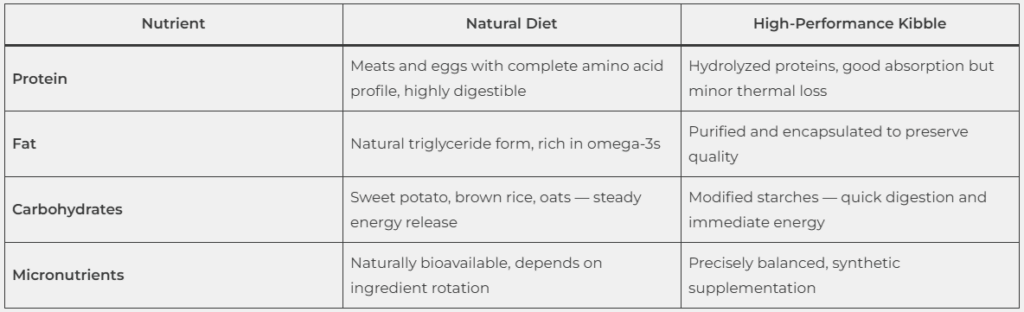
In natural feeding, proteins and fats remain in their original biological structures, allowing enzymes to act more efficiently.
In high-performance kibble, modern technology mimics this process through protein hydrolysis and starch gelatinization, making digestion faster and smoother.
Nutrient Comparison
Microbiota and Immunity: The Gut–Brain Connection
Diet directly affects the gut–brain axis, the biochemical pathway connecting intestinal microbiota and the nervous system.
A balanced gut promotes strong immunity, emotional stability, and cognitive focus, essential traits in working dogs.
Natural diets rich in soluble fiber and prebiotics encourage beneficial bacteria such as Lactobacillus and Bifidobacterium.
Meanwhile, premium kibbles often contain industrial prebiotics (MOS, FOS) that also support gut balance.
Neuroscientific studies confirm that gut health directly influences emotional regulation, focus, and learning capacity, explaining why balanced diets can enhance obedience, motivation, and stress tolerance in performance dogs.
Feeding Frequency and Management
The timing of meals directly influences performance, recovery, and concentration.
Most working dogs thrive on two to three meals per day, adjusted to energy expenditure.
- Before work: avoid feeding within two hours of physical activity, reduces drowsiness and the risk of gastric torsion.
- After work: prioritize quality proteins and fats for muscle repair and energy replenishment.
- Rest days: slightly reduce caloric intake to prevent fat accumulation.
Consistency in timing and portion size is often more important than diet type itself, dogs with predictable feeding routines show improved digestion, focus, and endurance.
Practical Example: Combined Feeding Plan
A 30-kg working dog active in daily patrols can perform optimally on a hybrid feeding model:
- 400 g of high-protein super-premium kibble (dietary base)
- 2 boiled eggs (protein and choline)
- 50 g of cooked fish, 3× per week (natural omega-3 source)
- 30 g of beef liver, 2× per week (vitamins and minerals)
- Cooked vegetables (fiber and antioxidants)
This approach combines kibble stability with the vitality of fresh foods, resulting in balanced digestion, stable energy, and a calm, focused temperament.
However, any mixed diet should be professionally monitored to ensure calcium–phosphorus balance and appropriate caloric levels.
Storage and Hygiene Guidelines
Proper hygiene and preservation are critical in both natural and kibble feeding:
- Store raw meats frozen in clean, sealed containers.
- Thaw under refrigeration, never at room temperature.
- Disinfect utensils and surfaces after food preparation.
- Keep kibble in cool, dry areas away from sunlight.
- Avoid mixing old and new batches.
These measures greatly reduce the risk of bacterial contamination, protecting both dogs and handlers, a concern supported by the Science.org findings on pathogenic bacteria in raw pet foods.
This topic is directly connected to our Management category, where we explore detailed posts on handling practices, hygiene routines, and preventive care to maintain health and performance in working dogs.
Conclusion
There’s no single correct answer in canine nutrition.
A natural diet provides freshness, control, and high bioavailability, while premium kibble offers safety, practicality, and precision.
The key is to understand the individual dog, its metabolism, workload, and recovery needs, and adapt feeding accordingly.
Many experienced handlers find the ideal solution in hybrid feeding models, combining the science of kibble with the vitality of fresh foods.
With planning and professional guidance, either approach can deliver what truly matters:
a strong, healthy, and mentally balanced working dog, ready to perform at its best every day.