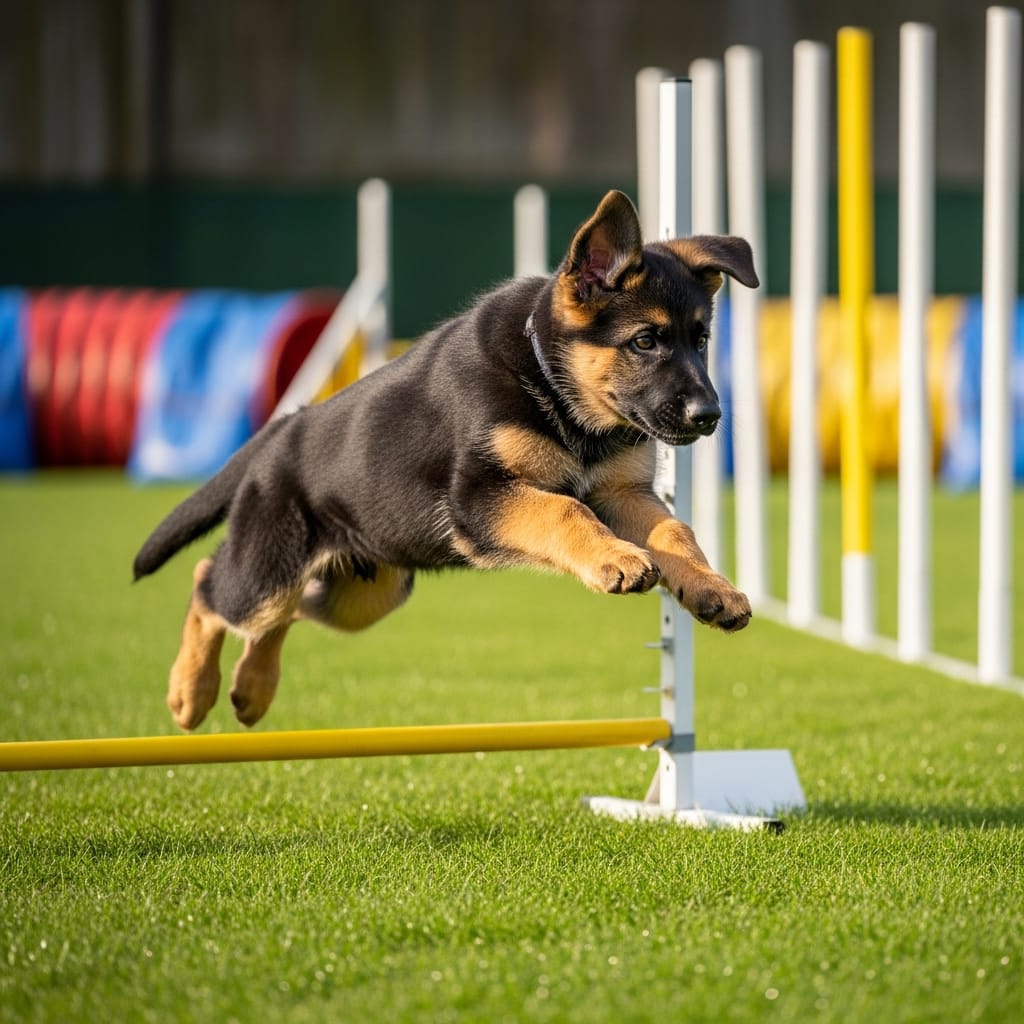

The Importance of Genetic Selection for Working Dogs
Genetic selection for working dogs combines science, practical experience, and ethical responsibility.
Unlike companion dog breeding, where aesthetics often carry more weight, the focus here is functionality, physical endurance, emotional stability, applied intelligence, and task-oriented instincts.
Every breeding decision and genetic or behavioral evaluation directly affects the performance, health, and stability of future generations.
With advances in molecular genetics and biotechnology, breeders and trainers now have far more precise tools. It is possible to analyze a dog’s genotype, predict the expression of desirable traits, and identify carriers of hereditary diseases.
When combined with temperament testing and performance records, these tools make it possible to produce dogs that are balanced, resilient, and reliable.
Fundamentals of Genetics Applied to Working Dogs
Genetics is the foundation of any rational, scientifically based breeding program.
Understanding how genotype and phenotype interact is essential for achieving consistent, predictable results.
What Is the Genotype?
The genotype represents the complete set of genetic information inherited from the parents.
It includes every hereditary potential, even traits that may not be visible but can still be passed on to offspring.
You can think of the genotype as an internal blueprint, a code that defines what the dog could become under the right environmental conditions.
A dog may carry genes for high endurance, courage, or emotional balance, but if those genes are never stimulated, or are suppressed by poor environmental factors, they may never fully express.
For example, a German Shepherd with an excellent genetic background for defense may appear apathetic or unmotivated if raised in a low-stimulation environment, without cognitive challenges or proper social contact.
The potential exists, but it remains dormant.
What Is the Phenotype?
The phenotype is the visible result of the interaction between genes and environment.
It is the observable expression, physical and behavioral, shaped by nutrition, management, socialization, training, and even climate.
Two dogs may share similar genes for speed and focus, but if one is raised with structured training and appropriate stimuli and the other in a chaotic or stressful environment, the first will develop a far superior phenotype, even though both have the same genetic base.
In short, the phenotype shows what the dog has become, while the genotype shows what it could be.
Why Distinguishing Genotype and Phenotype Matters
Confusing genotype with phenotype is one of the most common mistakes in working-dog breeding.
Many breeders select sires or dams based only on appearance or individual performance, ignoring the genetic foundation behind those results.
Two dogs with similar phenotypes (strength, courage, obedience) may have completely different genotypes, one from consistent, stable lines and the other by chance.
Only the first will reliably transmit those traits to its offspring.
Similarly, a dog with an excellent genotype, but raised in an inadequate environment, may never develop its full potential.
That does not make it genetically poor, it simply means its potential was never expressed.
Balancing Science and Observation
Modern breeding requires a combination of genetic analysis and practical observation.
DNA testing, pedigree mapping, and morpho-functional evaluations help identify genetic potential, but the experienced eye of the breeder and trainer is essential to interpret how that potential is expressed in real conditions.
This combination of science and applied knowledge allows for precise selection, reduces randomness, and produces consistent results over generations.
Practical Examples
Strong genotype, weak phenotype:
A dog from a top working-line pedigree carries genetics for defense and stability.
However, it was raised in isolation, without socialization and under punitive methods.
Despite excellent genetics, the dog becomes anxious and reactive, its phenotype fails to express its genotype.
Good phenotype, weak genotype:
A dog that performs well in basic tests and has a strong appearance is chosen for breeding.
However, it descends from a line with hip dysplasia and unstable temperament.
Its offspring show physical and behavioral issues, the phenotype misled the observer.
Genotype and phenotype in harmony:
A female from a balanced, healthy line is raised in a stable environment with structured training and cognitive challenges.
Her genotype aligns with her phenotype, and her offspring inherit consistent qualities of stability, endurance, and work focus.
In essence, selecting working dogs means aligning genetic potential with the right environment.
The genotype provides the base, what the dog can be, while the phenotype shows what it has actually become.
Successful breeding comes from understanding this difference and ensuring both aspects develop together through technical management, socialization, and intelligent training.
Genetic Planning and Lineage Selection
Every efficient breeding program begins with structured genetic planning.
Clear objectives must define the dog’s intended function, the essential traits, and those to avoid.
- Pedigree analysis: identifies ancestors that consistently transmitted desirable traits such as courage, stability, and intelligence.
- Inbreeding control: prevents the accumulation of recessive disorders and hereditary weaknesses that compromise performance and longevity.
- Genetic diversity: preserves fertility, adaptability, and long-term behavioral stability within working lineages.
An effective breeding program balances trait fixation with genetic diversity, ensuring healthy and functional lines.
Breeding working dogs does not mean intensifying aggression or drive, it means aligning structure, temperament, and functional aptitude to each operational context, whether detection, herding, patrol, or protection.
Dogs selected for emotional stability, mental clarity, and endurance are those capable of maintaining consistent performance under pressure.
Recent advances in canine genomics reinforce this principle.
Comparative studies between herding and non-herding breeds demonstrate positive selection in genes related to cognition, spatial memory, and motor coordination, showing that functional selection shapes working behavior over generations.
These findings confirm that the aptitude of a working dog is a direct result of neural architecture molded by genetic inheritance and guided selective pressure.
This convergence between science and applied breeding shows that true success lies in refining instinct through informed, data-driven decisions, not merely preserving appearance or tradition.
Modern breeding must integrate genetics, ethology, and technical management to produce dogs that are balanced, stable, and functionally efficient.
To explore the scientific evidence supporting this model, read the full paper published in Science Advances (2025):
Genomic Evidence for Behavioral Adaptation of Herding Dogs
Heritability and Behavior
Behavioral traits like courage, focus, stress tolerance, and emotional control have measurable heritability indexes, which indicate how much of a trait is genetically determined and how much depends on environment.
- High-heritability traits (e.g., grip strength, confidence) are easier to reproduce through genetic selection.
- Low-heritability traits (e.g., obedience, adaptability) rely more on training and management.
Modern programs combine standardized behavioral testing, such as the Puppy Aptitude Test, with genetic analysis to identify naturally stable, trainable lines.
This integration of genetics and ethology improves the probability of producing dogs that are focused, resilient, and ready for field performance.
Genetic Health and Disease Prevention
The genetic health of breeding stock directly affects performance and welfare.
Hereditary conditions like hip dysplasia, degenerative myelopathy, and epilepsy can severely impact working ability and quality of life.
DNA testing can now identify carriers of recessive mutations even in symptom-free dogs, preventing the propagation of harmful genes.
Additionally, epigenetics, the study of how the environment influences gene expression, plays an increasingly important role in breeding.
Factors such as nutrition, sensory stimuli, and stress management can activate or suppress gene expression, shaping the final phenotype.
Breeders interested in this subject can explore our Breeding category, where we will publish dedicated posts on epigenetics and environmental influence on genetic expression.
In short, even a dog with an outstanding genotype requires proper care, management, and environmental conditions to fully express its inherited potential.
Physical Structure and Functional Performance
A dog’s morphology must be consistent with its intended purpose.
Form and function work together, imbalance between the two leads to inefficiency and injuries.
- Search and rescue dogs: require endurance, light structure, and cardiovascular capacity.
- Guard or patrol dogs: need muscular strength, skeletal robustness, and powerful bite force.
- Detection dogs: benefit from lighter frames, strong lungs, and optimized olfactory anatomy.
Morpho-functional assessment evaluates limb angulation, chest depth, body proportions, and skull conformation.
These aspects influence speed, traction, and sensory efficiency.
The goal is to achieve harmony between anatomy and purpose, ensuring performance without
Temperament and Work Instincts
Temperament determines emotional stability and reliability in real situations.
Working dogs must remain confident and controlled under pressure, showing neither fear nor volatility.
Each field demands a distinct instinctive balance:
- Guard dogs: courage with restraint.
- Tracking dogs: persistence and concentration.
- Herding dogs: decision-making and social intelligence.
Natural drives, prey, hunt, and defense, must appear in functional proportions.
Training refines and channels these drives, but it cannot replace them.
Early observation from puppyhood is therefore essential to identify individuals with the instinctive balance needed for each role.
Technology and Innovation in Genetic Selection
Modern biotechnology has transformed the process of genetic selection for working dogs.
Comprehensive genomic sequencing now maps behavioral, physical, and immune traits with precision.
Advanced software integrates pedigree data, genetic results, and performance records to simulate matings and predict trait inheritance.
Artificial intelligence supports the detection of complex genetic patterns, improving selection accuracy.
However, technology remains a support tool, it complements but never replaces human judgment.
True breeding quality arises from the integration of science, ethics, and experience.
Conclusion
The ideal genetic selection for working dogs combines science, ethics, and applied knowledge.
It evaluates genotype, phenotype, health, temperament, instincts, and environment as parts of an interconnected system.
Each breeding decision shapes the next generation, demanding careful planning and responsibility.
The ultimate goal is to produce functional, healthy, and emotionally stable dogs capable of serving with excellence and dignity.
Success in breeding lies in transforming genetic potential into real performance, without compromising welfare or natural instinct.